Finn gives us courage Contact Donate
Gene therapy & research

Where research stands today

SLC6A1 was first linked to epilepsy in 2015. Ten years later, in September 2025, a child in the USA became the first to receive gene therapy for SLC6A1. Here you can find out which approaches exist, what they promise and which questions are still open.

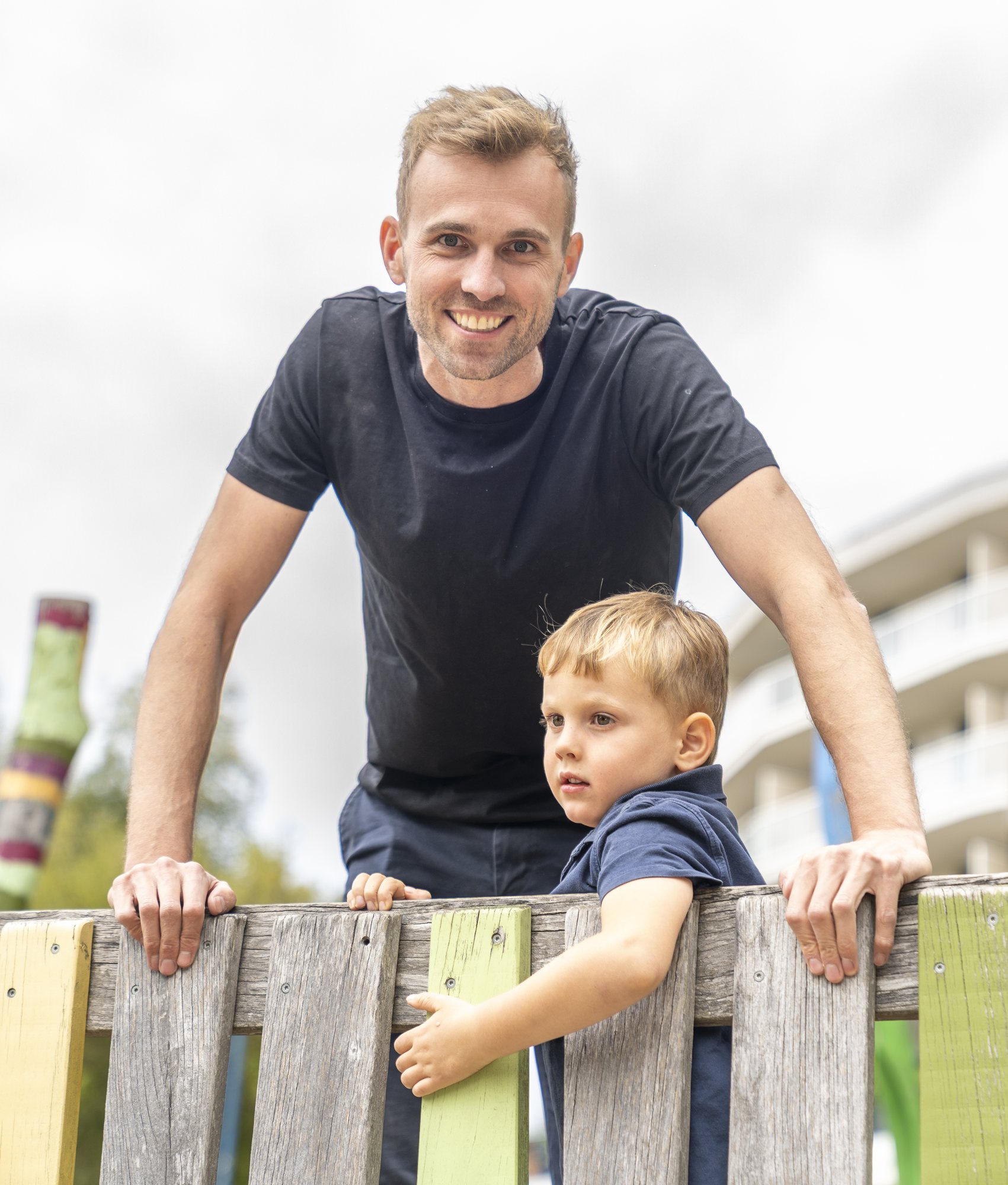
David and Finn at the fence

The idea in three steps

  1. 01

    The cause

    One of two copies of the SLC6A1 gene doesn't work. Nerve cells lack the transporter GAT-1, which clears away GABA, the brain's brake messenger.

  2. 02

    The approach

    A harmless virus shell (AAV9) carries a healthy copy of the gene into nerve cells. It is given once into the spinal fluid.

  3. 03

    The goal

    The cells make enough GAT-1 again. The brain's brake works more reliably, seizures decrease, and Finn stops losing skills.

Explained simply

How the gene therapy works

1

A healthy recipe is written

In the lab, researchers make an intact copy of the SLC6A1 recipe. It comes with a “switch” that decides in which cells the recipe will later be read.

NEW · INTACT SLC6A1 switch
2

The recipe goes into a parcel

The packaging is an empty virus shell called AAV9. Its own genetic material has been removed – it cannot make anyone ill. It is just the courier that knows how to get into nerve cells.

recipe AAV9 – empty virus shell harmless courier
3

One injection into the spinal fluid

The parcels are injected once into the spinal fluid through a fine needle in the lower back – similar to a lumbar puncture. The fluid bathes the spinal cord and brain and carries the parcels to where they are needed.

brain lower-back injection once spinal fluid carries the parcels upwards
4

The parcel is unpacked

The shell docks onto nerve cells and releases the recipe. It settles next to the cell's own genetic material without changing it. The “switch” makes sure it is read where GAT-1 belongs.

nucleus recipe in shell docks
5

The cell makes its cleaners again

Following the new recipe, the cell builds intact GAT-1 transporters. They are folded correctly, pass quality control and reach the cell wall – where they are supposed to work.

CELL Factory builds GAT-1 arrives misfolded scrapped
6

GABA is cleared away again

After every signal, the cleaners pull GABA back out of the gap between the nerve cells. The brake only acts as long as needed – and accelerator and brake come back into balance. The hope: fewer seizures and room to develop.

Sending nerve cell ① The cell makes GABA from glutamate ② released ④ GAT-1 takes GABA back Receiving nerve cell ③ GABA brakes – the signal calms down Then the gap is clear for the next signal
!

The art: not too little, not too much

Too few cleaners won't do the job. Too many – or in the wrong cells – tip the balance the other way: in animal models this caused more seizures. And gene therapies are not without risk: in trials for other conditions, children have already died from severe side effects. That is why the first trial focuses on safety, and why the “switch” matters so much.

Simplified from Samanta 2026, Guo et al. 2025 and trial registry NCT07173153.

just right too little seizures remain too much over-correction
Milestones

From discovery to the first trial

SLC6A1 research is young, but it has picked up speed.

  1. SLC6A1 is first described as a cause of epilepsy with myoclonic-atonic seizures.

  2. The shared mechanism is clear: with most variants the protein never reaches its place in the cell membrane.

  3. 4-phenylbutyrate helps in animal models: cells take up GABA again and seizure patterns decrease.

  4. First case series in children: 4-phenylbutyrate is well tolerated; seizures decrease in 7 of 10 children with SLC6A1.

  5. The US Food and Drug Administration clears the first gene therapy trial in humans.

  6. Maxwell Freed (8) from the USA becomes the first person worldwide to receive SLC6A1 gene therapy, at Nationwide Children's Hospital.

  7. In a cell model, a low gene therapy dose combined with 4-phenylbutyrate works better than either alone.

The first patient

Maxwell: what one family made possible

2018SLC6A1 diagnosis
~7years to treatment
8years old when treated

Maxwell Freed from the USA was diagnosed in 2018. His mother Amber Freed founded the patient organisation SLC6A1 Connect and raised money for research. That funded the start of gene therapy work at UT Southwestern in Dallas in 2018; mice with Maxwell's variant were bred specifically for it.

The therapy was brought to the clinic by Allison Bradbury and Kathrin Meyer at Nationwide Children's Hospital in Columbus and manufactured by Andelyn Biosciences, co-funded by SLC6A1 Connect and the Simons Foundation. The FDA cleared the trial in June 2025; Maxwell received the infusion in September 2025.

First observations: three months later his family reported better mood, muscle tone and coordination – and new steps such as riding a bike. The researchers themselves say it is too early to call it a cure. It is one child, without a comparison group.

View the trial on ClinicalTrials.gov →

Other approaches

More than one path

used in children

4-Phenylbutyrat (Ravicti)

An approved drug used in metabolic medicine, available in Germany for example as Ravicti. In many SLC6A1 variants the cell does make the transporter, but it folds incorrectly and gets stuck inside the cell. 4-phenylbutyrate helps it find the right shape and reach the cell wall, where it is supposed to work. In case series, seizures dropped markedly in children with SLC6A1, in some cases for years. Finn has been taking Ravicti off-label since September 2026.
cell model

Combination

A low gene therapy dose plus low-dose 4-phenylbutyrate restored GABA uptake better than either alone. That could lower both the risk of over-correction and side effects.

early research

Antisense molecules

Short molecules could make the healthy copy produce more transporter – a principle already being tested in Dravet syndrome. For SLC6A1 there is no peer-reviewed publication yet.

To be honest

Open questions

  • Whether gene therapy is safe and works long-term will only become clear over the years – so far there is experience with just one child.
  • The current trial is designed only for Maxwell's variant. For other children, the trial would need to be expanded or new trials started.
  • There is no randomised controlled trial yet for any SLC6A1 treatment.
  • The right dose and how precisely the gene copy acts are still being researched.
  • How much can still change in a brain that has already developed is unclear. Earlier is better.
  • The therapy is not available in Germany. Treatment in the USA costs around one million euros.
For Finn

Why we are raising money anyway

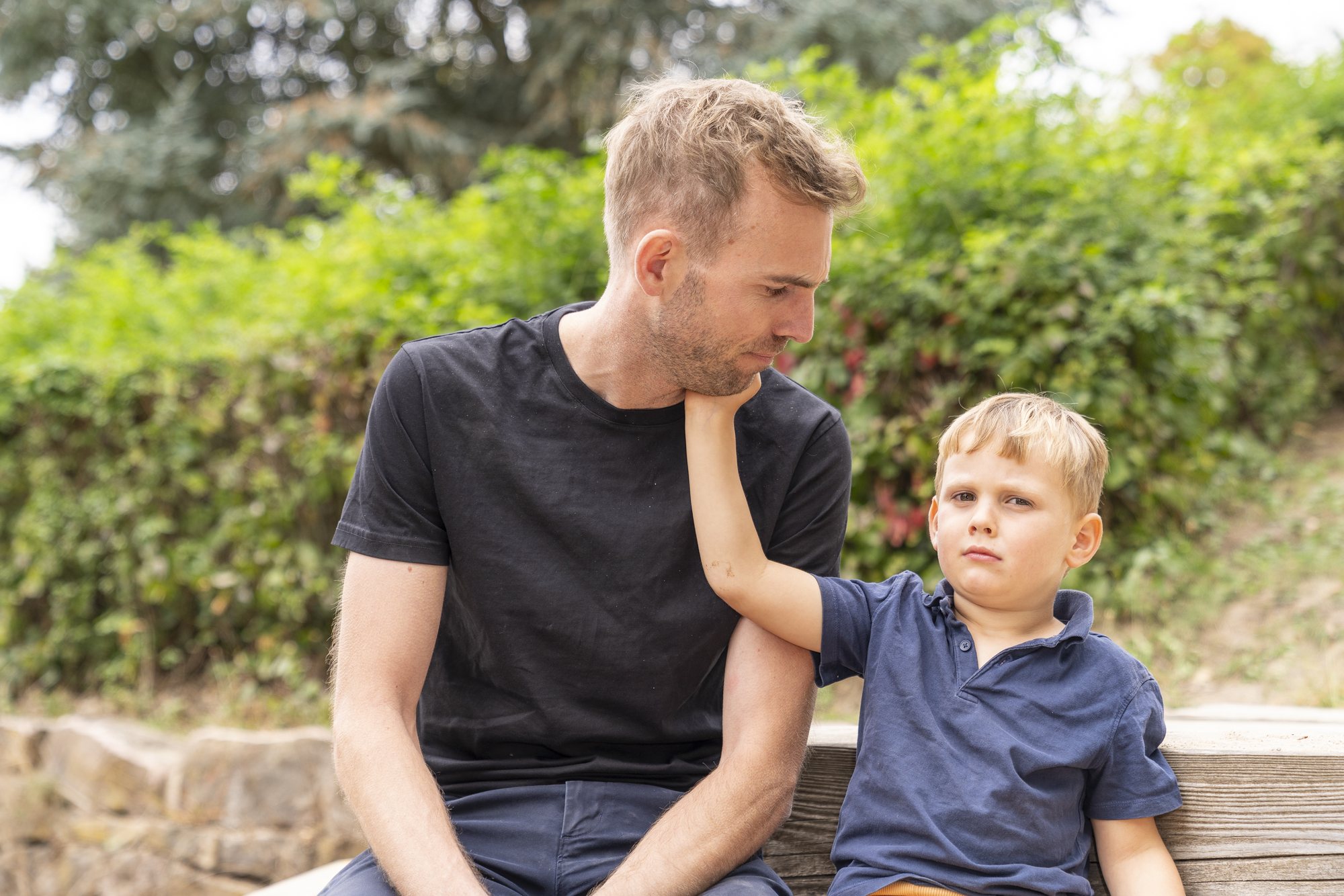
David and Finn on the bench

We don't know whether or when Finn can receive gene therapy. But we do know: if the door opens, money must not be what stops it. And every month counts, because the younger the brain, the more can be preserved.

Our promise: if gene therapy doesn’t happen for Finn, every euro goes to SLC6A1 Deutschland e.V. or SLC6A1 Connect, and so to the families living with the same diagnosis.

Transparency

What happens to your money?

What are you raising money for?

For gene therapy for Finn in the USA. A treatment costs around €1 million. The first milestone on GoFundMe is €250,000.

Who manages the money?

We do, Bertille and David. “Finn macht Mut” is our family’s private fundraiser, not a charity or foundation.

Do I get a donation receipt?

No. Because this is a private fundraiser, we can’t issue donation receipts.

What if the therapy doesn’t happen?

If we don’t go ahead with the therapy – for example because there isn’t enough money or the risk is too high – we will donate the money to SLC6A1 Deutschland e.V. or to SLC6A1 Connect. Both support families living with the same diagnosis.

Sources

  1. Samanta (2026): SLC6A1–Related Neurodevelopmental Disorder: A Scoping Review of Clinical Features and Emerging Therapeutic Strategies
  2. Nationwide Children's Hospital (2025): Phase I/II Intrathecal Gene Delivery Clinical Trial of scAAV9.P546.SLC6A1 for SLC6A1 Neurodevelopmental Disorder (NCT07173153)
  3. Pediatrics Nationwide (2025): Setting the Stage: The Next Era of Gene Therapy for Ultrarare Disease
  4. Ohio Life Sciences: Maxwell's Story
  5. People / AOL (2025): 8-Year-Old Has Disease So Rare It Doesn't Have a Name. Now He's First in the World to Receive Treatment
  6. Guo et al. (2025): AAV9/SLC6A1 gene therapy rescues abnormal EEG patterns and cognitive behavioral deficiencies in Slc6a1–/– mice
  7. SLC6A1 Connect: Press Release
  8. Carvill et al. (2015): Mutations in the GABA Transporter SLC6A1 Cause Epilepsy with Myoclonic-Atonic Seizures
  9. Mermer et al. (2021): Common molecular mechanisms of SLC6A1 variant-mediated neurodevelopmental disorders in astrocytes and neurons
  10. Nwosu et al. (2022): 4-Phenylbutyrate restored γ-aminobutyric acid uptake and reduced seizures in SLC6A1 patient variant-bearing cell and mouse models
  11. Grinspan et al. (2024): 4-Phenylbutyrate for STXBP1 and SLC6A1. Safety, tolerability, seizure, and EEG outcomes. A case series at 2 centers
  12. DeLeeuw et al. (2026): Unraveling 4-Phenylbutyrate's Therapeutic Role in SLC6A1 Disorders: Pharmacochaperoning Over HDAC Inhibition
  13. van Walree et al. (2026): Drug repurposing of glycerol phenylbutyrate for children with SLC6A1-related neurodevelopmental disorder: A prospective open-label case series
  14. Delahanty et al. (2026): 4 Phenylbutyrate Plus Gene augmentation: A Dual Therapy To Rescue of SLC6A1 Variant Associated Developmental And Epileptic Encephalopathy
  15. Lerche et al. (2025): Gene-replacement therapy in neurodevelopmental disorders: progress and challenges
  16. Shieh et al. (2023): Safety and efficacy of gene replacement therapy for X-linked myotubular myopathy (ASPIRO): a multinational, open-label, dose-escalation trial

This page does not replace medical advice. Treatment decisions should be made with your child's doctors. Compiled by Finn's parents, as of October 2026.

Donate now